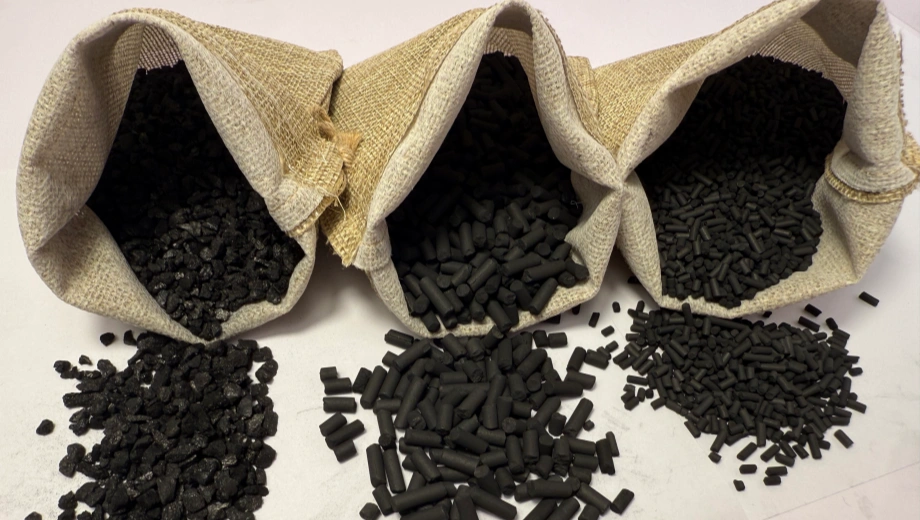
1. Classification of Activated Carbon
Activated carbon can be classified by shape into two main categories: granular and powdered. Activated carbon is considered “granular” if the majority of its particles are larger than 0.18 mm (80 mesh), and “powdered” if the majority of its particles are smaller than 0.18 mm (80 mesh).
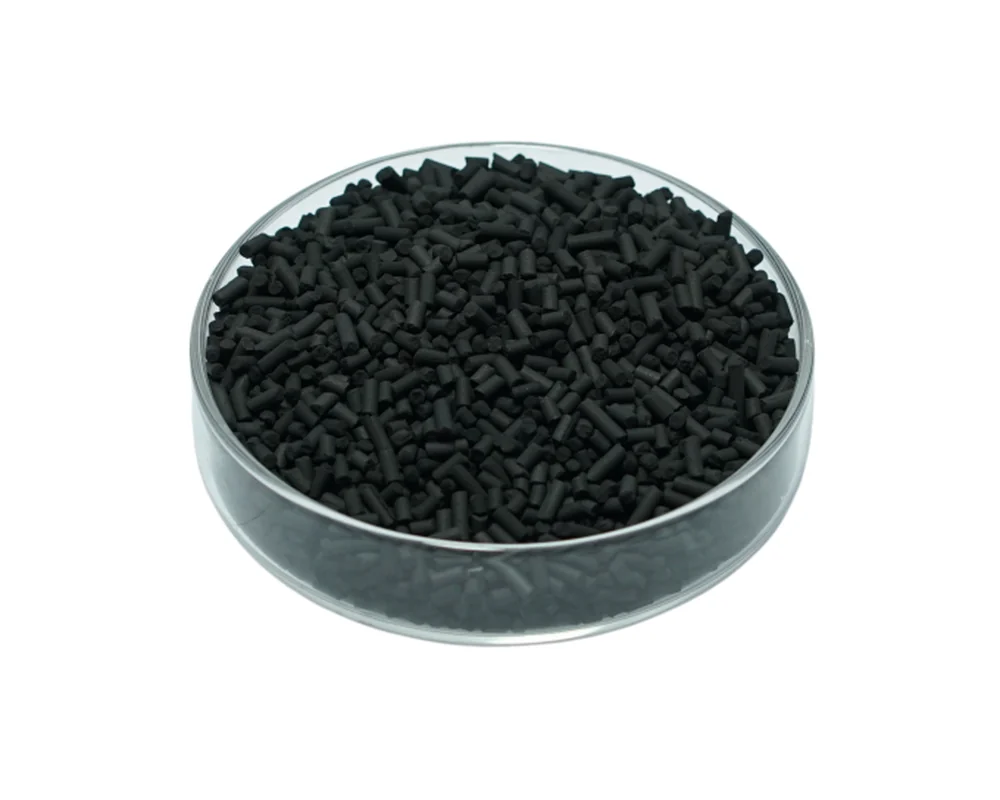
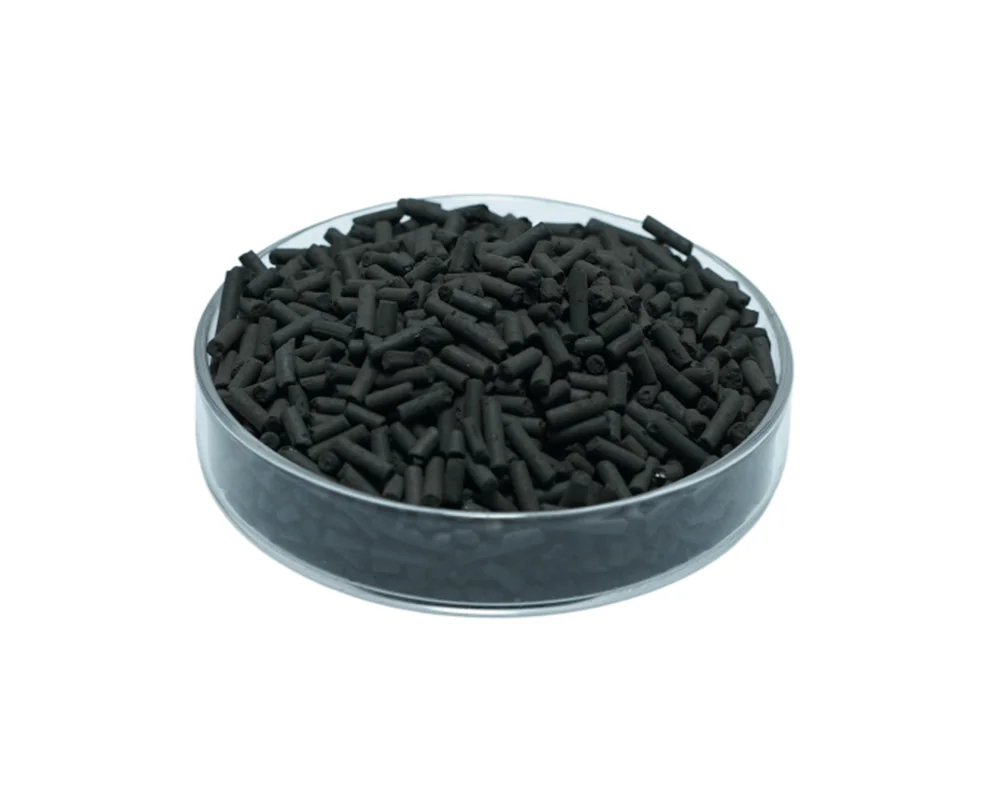
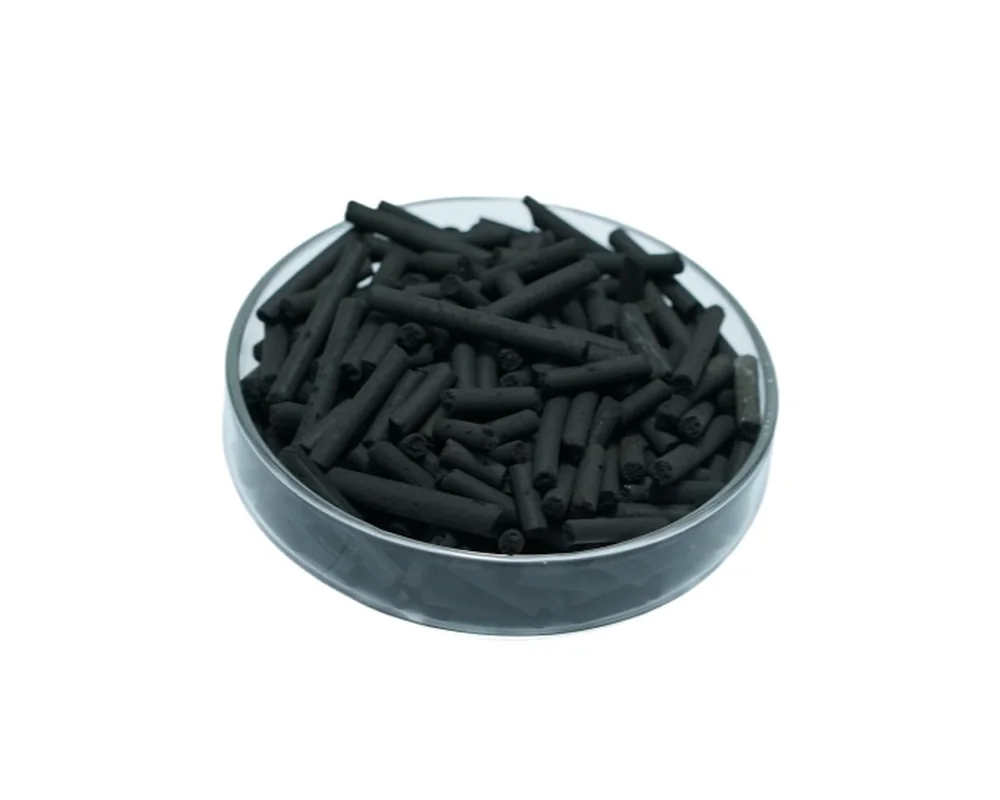
Granular activated carbon can be further subdivided into shaped and unshaped varieties. Shaped activated carbon includes cylindrical and spherical forms, while unshaped activated carbon—also known as crushed or irregular activated carbon—consists of fragments. Both coal-based and wood-based (including those derived from fruit shells, coconut shells, bamboo, etc.) activated carbons are available in either shaped or unshaped granular forms. Among these, cylindrical activated carbon holds a particularly significant position in both research and practical application.
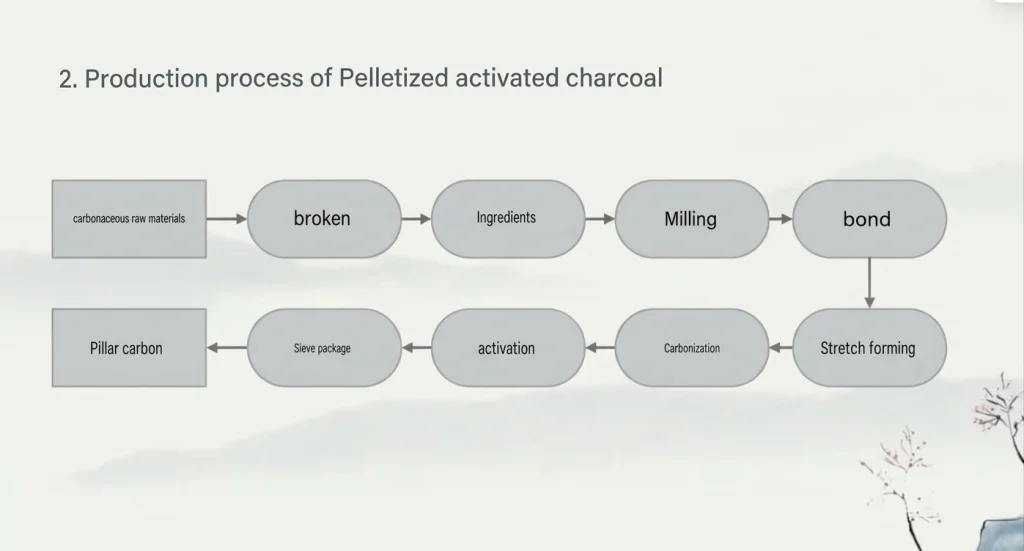
3. Typical Diameters of Pelletized Activated Carbon
The available sizes are 0.9mm, 1.5mm, 2mm, 3mm, 4mm, 5mm, and 9mm. The length of the Pelletized activated carbon is generally around 1.5 times its diameter. Among them, the 9mm pelletized activated carbon is usually used as a desulfurization and denitrification carbon (also known as activated coke or large particle carbon in the industry). The diameter of the pelletized activated carbon is related to the opening size of the die. Die plates of different sizes can be selected according to the specific application or the user’s requirements.
4. Applications of Pelletized Activated Carbon
As a specific type of activated carbon, Pelletized activated carbon has become a fundamental material, finding extensive application across various sectors—including industry, agriculture, national defense, science and technology, environmental protection, and everyday life. Pelletized activated carbon is widely used in gas-phase adsorption, liquid-phase adsorption, and catalysis; these applications are discussed individually below.
4.1 Applications in Gas-Phase Adsorption
Pelletized activated carbon holds a leading position in gas-phase adsorption applications. Whether used for air purification, solvent recovery, desulfurization (hydrogen sulfide or sulfur dioxide), denitration, or protective purposes, pelletized activated carbon plays an essential role. It is characterized by a well-developed microporous structure, high mechanical strength, minimal surface dust, and a high regeneration yield. Due to its extensive microporosity, it is particularly well-suited for adsorbing small molecules, offering superior gas-phase adsorption capacity—with carbon tetrachloride (CTC) adsorption rates reaching as high as 90% or more. Consequently, it is widely employed in fields such as the purification of toxic or hazardous gases, the separation and refining of industrial gases, the recovery of volatile organic solvents, and use in household air purifiers.
4.1.1 Pelletized Activated Carbon for Air Purification
Key Technical Specifications:
The national standard GB/T 7701.1-2008 specifies the requirements for pelletized activated carbon used in air purification:
Moisture content ≤ 5%
Hardness > 90%
Bulk density: 450–600 g/L
Carbon tetrachloride (CTC) adsorption rate > 50%
Based on these specifications, the primary performance indicator is the carbon tetrachloride (CTC) adsorption rate. Since air contains a wide variety of harmful gaseous pollutants, the adsorption rate for carbon tetrachloride—used here as a representative gas—serves as a proxy for the activated carbon’s efficiency in removing pollutants. Internationally, “butane activity” and “butane working capacity” are also used as metrics; both methods are acceptable. Experimental evidence has shown a linear correlation between the carbon tetrachloride adsorption rate and butane activity, allowing for the interchangeability of these results.
4.1.2 Pelletized Activated Carbon for Solvent Recovery
The national standard GB/T 7701.1-2008 specifies the key technical indicators for pelletized activated carbon used in solvent recovery:
Moisture content ≤ 5%;
strength > 90%;
bulk density > 350 g/L;
particle size 3 mm or 4 mm;
ignition point > 350°C;
carbon tetrachloride (CCl₄) desorption rate > 80%; carbon tetrachloride (CCl₄) adsorption rate > 70%.
Pelletized activated carbon for solvent recovery is primarily used to recover organic solvents such as benzene, toluene, xylene, acetone, alcohols, esters, ethers, gasoline, chloroform, and carbon tetrachloride. Since the recovery process relies on the principle of temperature-swing adsorption, the parameters concerning carbon tetrachloride adsorption rate, carbon tetrachloride desorption rate, and the ignition point are particularly critical. In practical application, the activated carbon must not only be capable of effectively adsorbing the solvents but also of releasing them during the desorption phase—all while ensuring that the risk of ignition is prevented.
4.1.3 Pelletized Activated Carbon for Desulfurization
Pelletized activated carbon for desulfurization is primarily used to remove hydrogen sulfide in synthetic and other industrial production processes. The standard GB/T 7701.1-2008 specifies the key technical indicators for this type of activated carbon:
Moisture content ≤ 5%;
mechanical strength > 90%;
bulk density 400–550 g/L.
Water capacity > 62%;
saturated sulfur capacity > 800 mg/g.
For the removal of hydrogen sulfide, the activated carbon requires a large pore volume; measuring water capacity serves as the most convenient method to assess this. In addition to determining the saturated sulfur capacity, the breakthrough sulfur capacity should also be evaluated. Practical experience in hydrogen sulfide removal has shown that impregnating the pelletized activated carbon with an alkaline substance, such as potassium hydroxide, enhances its performance; in the industry, this is referred to as “alkali-impregnated pelletized carbon.”
Water capacity and saturated sulfur capacity are two critical performance parameters for pelletized activated carbon used in hydrogen sulfide removal.
4.2 Applications in Liquid-Phase Adsorption
The inherently hydrophobic nature of the activated carbon surface enables it to adsorb a wide variety of substances from water, making it highly effective for the purification of aqueous solutions. When used as an adsorbent in the liquid phase, granular (pelletized) activated carbon offers several advantages: it is convenient to use and easy to regenerate, allows for reduced total consumption, facilitates the scaling up of adsorption equipment, enables continuous operation, and is readily adaptable to automated control. The following section focuses specifically on the use of granular activated carbon in water treatment; other applications—such as liquid-phase refining, recovery, and separation—will not be discussed in detail.
4.2.1 Pelletized Activated Carbon for Drinking Water Treatment Plants
Due to the deterioration of surface water quality and the implementation of more stringent drinking water standards, the use of activated carbon for advanced water treatment—supplementing conventional treatment processes—has become the preferred technical upgrade for municipal water treatment plants in China. A particularly effective advanced treatment method involves the combined use of ozone and activated carbon filtration (biological activated carbon) to remove organic matter from the water. Typically, a water treatment plant with a daily production capacity of 100,000 cubic meters requires an initial charge of approximately 900–1,000 cubic meters of activated carbon for such advanced treatment systems.
4.2.2 Regeneration of Granular Activated Carbon for Water Purification
In the context of advanced water treatment at municipal waterworks, the regeneration of granular activated carbon (GAC)—including both cylindrical and crushed-granular forms—is approached in two ways: the ozone-biological activated carbon (O₃-BAC) process and the conventional (adsorption-only) activated carbon process. In the O₃-BAC process, the activated carbon undergoes “biological regeneration,” typically resulting in a service life of over five years; at some water treatment plants, the carbon has remained effective for up to eight years, with the only requirement being the periodic addition of fresh carbon to compensate for physical attrition, rather than formal regeneration. For plants utilizing conventional activated carbon adsorption, it is recommended that the carbon be removed and regenerated after approximately one year of service. Thermal regeneration—carried out in a rotary kiln—is an effective method, capable of achieving both a regeneration performance recovery rate and a yield (mass recovery) of over 90%.
4.2.3 Application of Pelletized Activated Carbon in Wastewater Treatment
Pelletized activated carbon is currently used extensively in wastewater treatment. Wastewater is categorized into municipal sewage and industrial wastewater. Municipal sewage, following biochemical treatment, can undergo advanced treatment using activated carbon; this process removes residual, hard-to-degrade organic compounds, odorous substances, oxygen-consuming materials, inorganic nutrients, and color-causing agents, thereby enabling the effluent to meet discharge standards or facilitating its reuse (reclaimed water). For industrial wastewater, the application of activated carbon should be tailored to the specific characteristics of the wastewater, with treatment strategies developed and promoted accordingly.
Please contact us , if you need activated carbon, https://www.yunchengcarbon.com/products/pelletized-activated-carbon/coal-based-activated-carbon-pellets/