
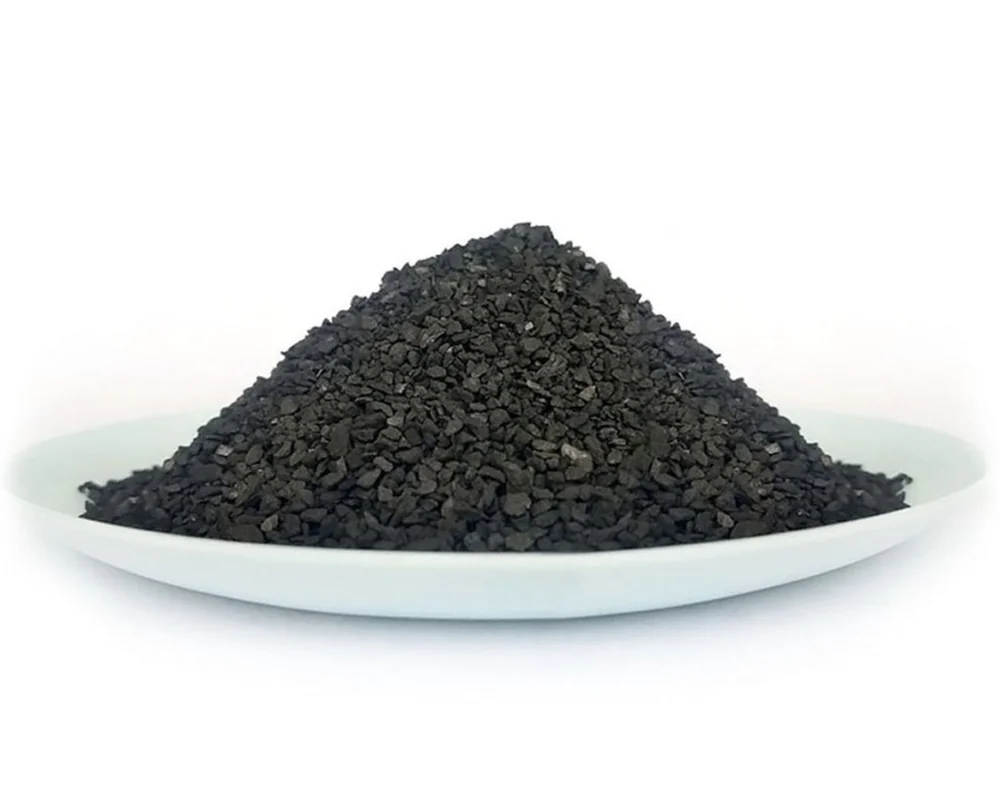
Description
Our agglomerated (briquetted / re‑agglomerated) granular activated carbon is manufactured by pulverizing selected bituminous coal, pressure‑briquetting with binder, carbonization and steam‑activation, then crushed and screened to target particle sizes.
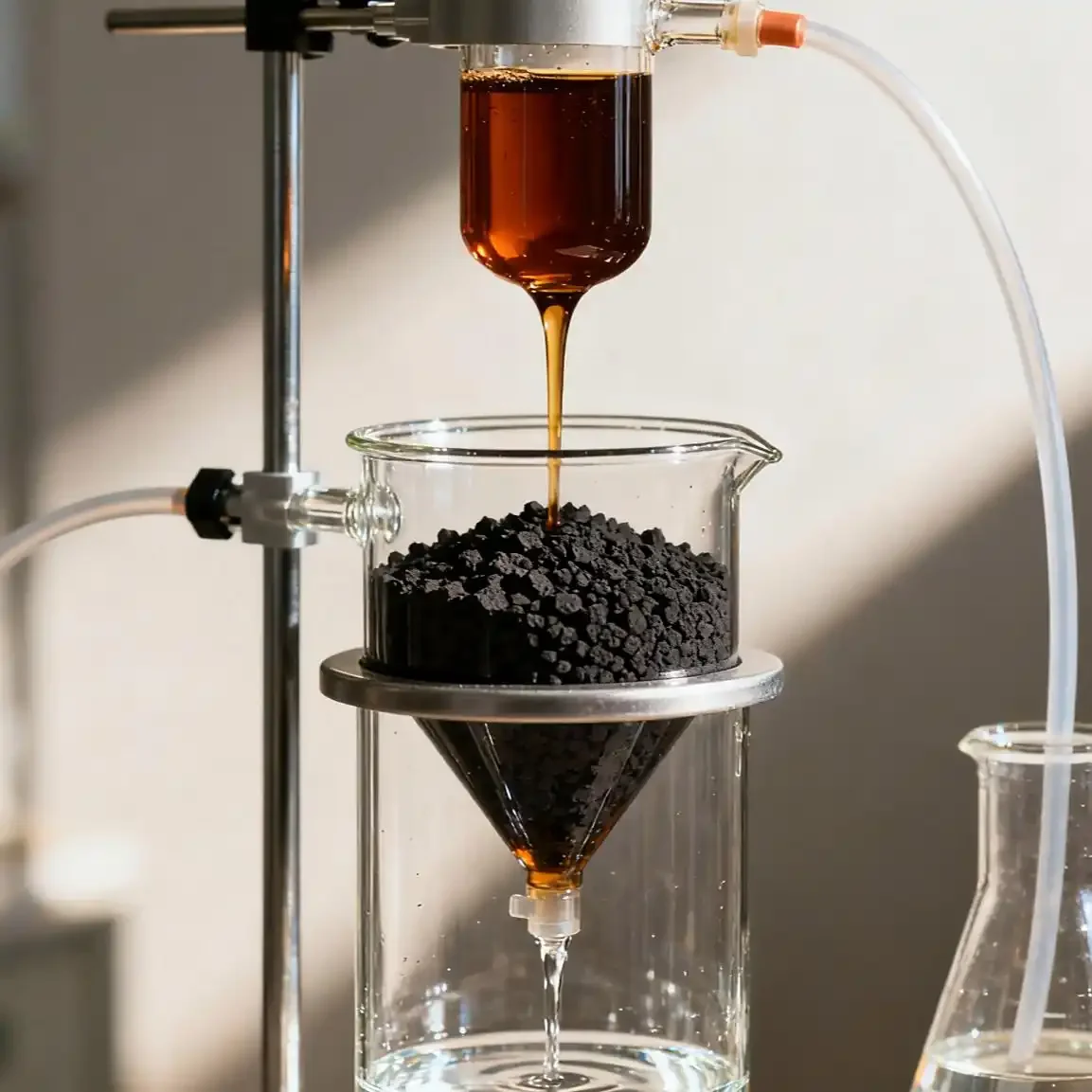
Optimized mesopore structure delivers outstanding molasses‑number performance for large‑molecule color‑body removal. It is widely adopted for syrup decolorization in sugar refineries. MgO‑impregnated modified grade is available upon custom request for enhanced sugar‑refining performance. Contact us for TDS, batch‑wise COA and custom‑grade support.
Parameters
| Items | Unit | Results |
| Particle Size | mesh | 4*8, 8*16, 8*30, 12*40 |
| Iodine Value | mg/g | 900-1000 |
| Molasses Number | / | 190-240 |
| Hardness | % | 95-99 |
| Moisture | % | <3 |
| Abrasion number | – | >75 |
| pH | – | 8-11 |
| Ash | % | 6-12 |
Technical Note: For food‑contact sugar‑refining service, please specify your requirements for ash content and soluble impurities when requesting quotation. Batch‑specific COA documents are available.
Application
- Sugar & Syrup Refining: Decolorization & purification for raw sugar, maltose, glucose, starch‑sugar, xylose, lactose and other carbohydrate solutions.
- Food‑grade Liquid Decolorization: Decolorization of edible oil and food‑process liquid streams.
- Industrial Wastewater Treatment: Removal of large‑molecule organics, colloids and color bodies.
- Gas‑phase Purification: VOC and odour removal for selected industrial exhaust streams.
Note: Custom MgO‑impregnated agglomerated carbon is available for sugar‑refinery projects, delivering pH‑buffering effect and improved decolorization efficiency.
Features
FAQ
- What is molasses‑number for agglomerated activated carbon?
- Molasses number reflects mesopore capacity, directly indicating performance for large‑molecule color‑body removal in sugar‑syrup decolorization. Our typical range:190‑240.
- What benefit does MgO‑impregnated grade bring for sugar refining?
- MgO‑modified carbon provides pH‑buffering effect, stabilizes syrup pH and improves overall decolorization efficiency for sugar‑refinery deep‑bed filtration.
- Which mesh size is recommended for sugar‑refinery deep‑bed filter?
- 8×30 mesh is industry‑popular for syrup filtration. Custom particle‑size distribution is supported.
- Can you provide batch‑specific test reports?
- Yes, COA, SDS and third‑party test documents are available upon request.


